A decade of digital scholarship at Leiden University Libraries

Head of the Leiden University Libraries' (UBL) Centre for Digital Scholarship, Alenka Prinčič, writes about the past and future of digital scholarship at the UBL.
When I started at the Leiden University Libraries (UBL) as Head of the Centre for Digital Scholarship about three years ago, I would sometimes get a question, a phone call usually, on what kind of scholarships we offer to support education. While explaining that we do not deal with financial support for learning or doing research, I realised that I too needed to find the right words to explain what ‘digital scholarship’ really means.
What is digital scholarship?
There is no one definition, in fact. While more familiar to English-speaking audiences, perhaps, the term is a bit challenging for an international scholar.
Scholarship can be defined (from the ancient Greek skhole meaning "leisure") as the pursuit of knowledge and learning by those who are (temporarily) free of labour and should be distinguished from learning on the job.
Scholarship, as we like to define it, encompasses the core activities of a university: research, writing, learning and teaching. Hence, digital scholarship is about the implications of the digital turn on scholarship. Digital scholarship explores the ways in which our current digitisation drives the work of a university, making use of digital data, text, and tools. We like to perceive digital scholarship as (*adapted from McMaster University's Lewis & Ruth Sherman Centre for Digital Scholarship):
- Interdisciplinary. Digital scholarship involves researchers from the full spectrum of academic research, not only across different disciplines, but also from centres of expertise, such as libraries, ICT departments and administrators.
- Collaborative. It is based on collaboration that involves conscientious stakeholder relationships and community building, acknowledging everyone who contributes to a research project.
- Inventive. Digital scholarship develops new ways to do research and disseminate results of research, in which the digital component might range from large to small or even peripheral, yet always open.
“The Centre for Digital Scholarship is a partner in education & research, it is a virtual and a physical center that offers high-quality expertise, services and systems. Its goal is to support the researcher in the use of digital research techniques, and to promote the responsible use of digital technology and research methods in education & research. With this, the UBL can support innovation in research and education.” (UBL-beleidsplan 2016-2020)
You have to know the past to understand the present
Similar to many other university libraries, the UBL began to reform its support for research more than a decade ago. Starting with numerous productive and inspiring sessions about how to organize research data management support, how to use digital data, and how to disseminate findings using digital means, a clear vision developed alongside a plan to establish a new department. With this understanding of the importance of digital scholarship, the university librarian mandated setting up a new department within the UBL – the Centre for Digital Scholarship (CDS).
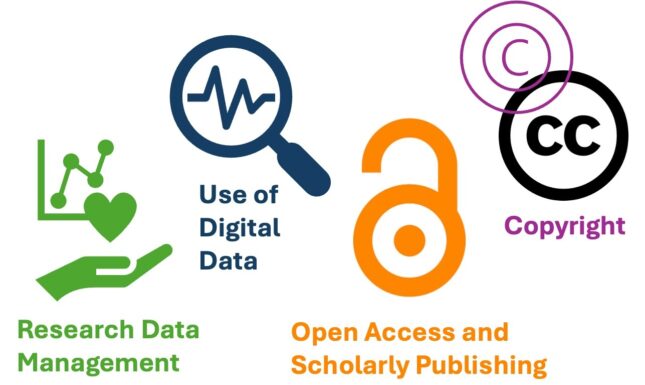
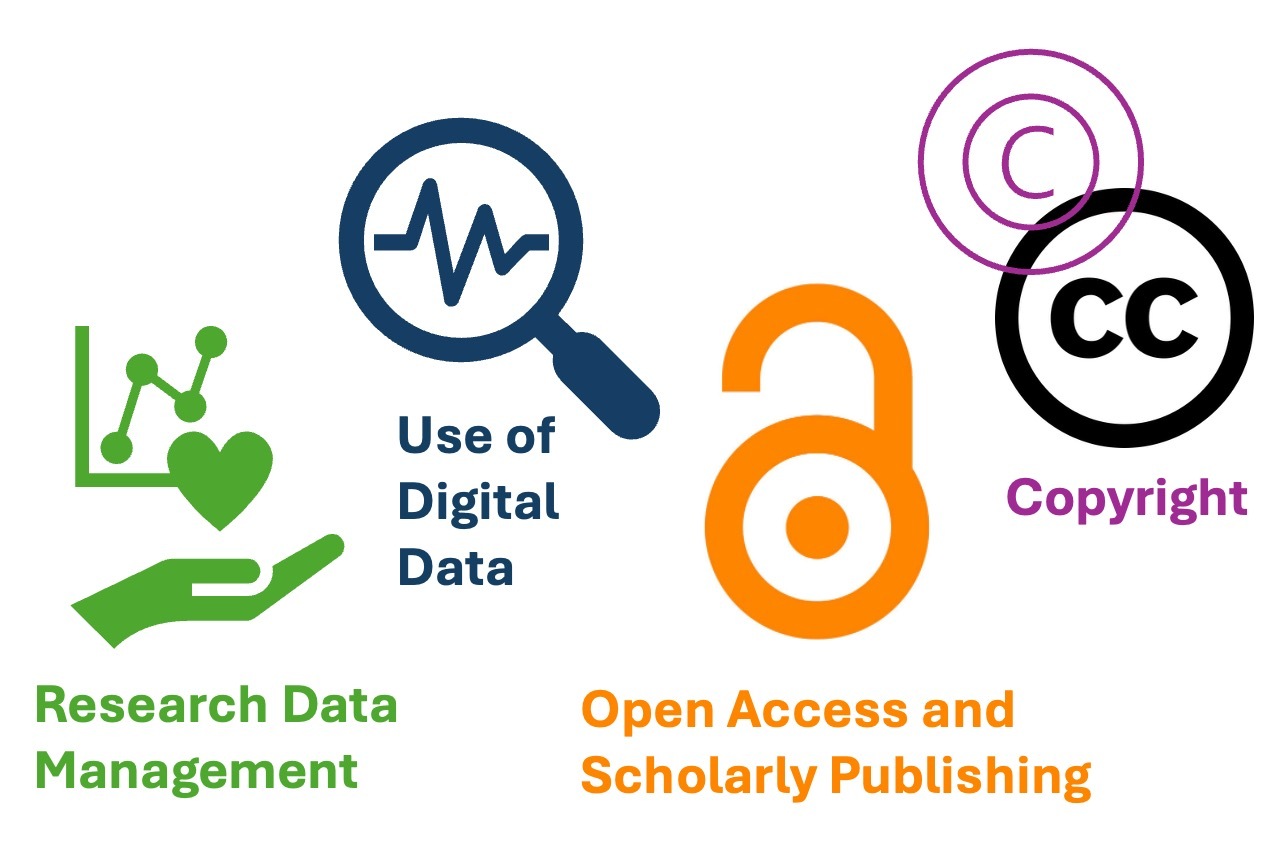
At its birth on the 1st of July 2016, the initial support offered by the CDS focused on data management, text and data mining, and open access publishing. The activities included giving advice on writing data management plans, and organising the use of digital tools for data and text mining and data visualisation. Additionally, the GIS–georeferencing of digital maps, and the creation of a research collection using this georeferenced material have formed a part of CDS services. The phenomenon of open access (OA) and the associated copyright regulations and publication advice had already been high on the agenda of the UBL much earlier. Together with national and international partners, the UBL had developed infrastructure and taken initiatives to support OA publishing. Due to new publication business models and negotiations with publishers, authors required more support. The UBL regularly organised workshops with advice to authors regarding open access and copyright. This particular area of support is still as valid and as urgent today as it was when open access began to take off more than a decade ago.
Growing expertise, professionalized services
The Centre for Digital Scholarship has experienced ten years of transition and growth, with new areas of expertise, a new leader, and new approaches to open science support. A small team has worked hard, jointly with other UBL departments, to develop its services across the university.
The initial workshop, How to Write a Data Management Plan, which is still the team’s most popular one, has evolved into a broad range of data management courses that are now accompanied by workshops and tutorials on FAIR data, on open access and copyright, and courses that serve to develop the digital skills of researchers, staff, and students.
- With the introduction of faculty-based data stewards, the CDS initiated a transition from first- to second-line support, serving as both a meeting point and expertise centre for support staff and researchers. The Research Data Management (RDM) team expanded its community, bringing together researchers and support staff across Leiden University. In addition to monthly meetings with the university’s data stewards, the RDM team organises a monthly Connect & series covering topics such as metadata standards, sensitive data, and AI.
- Initial copyright support evolved into a Copyright Information Office. Manned by a legal expert, this office provides a solid basis for the provision of information on copyright and professional advice to both individual researchers as well as senior university management. Alongside UNL (Universiteiten van Nederland), and in co-authorship within a national working group, a report ‘Harmonisation of Employers’ Copyright’ has led to a Leiden's university policy on Employers Copyright. This policy was subsequently also adopted by the Leiden University Medical Center.
- The expertise area on Digital Data has succeeded its mission through collaborations with various library and university departments, through various projects. How cool is this: The team recently collaborated on the ERC project Pages of Prayer (led by Anna Dlabačova) to establish an online database to aggregate data from the Bibliotheca Neerlandica Manuscripta and the Short Title Catalogue Netherlands. Based on the collected data, researchers could explore, among other things, the co-transmission of prayer texts, and visualise its patterns using network analysis.
- Another story worth sharing! Open access has a long tradition within the UBL. Our long-standing OA policy, mandating and facilitating ‘green open access’ through our institutional repository, and using the Taverne amendment since 2018, have enabled the growth of open access publications of the university. These institutional open access policies have been a crucial step and a starting ground for new publication strategies that will evolve. The past year was marked by the renewed efforts to produce publication policies for each faculty – a long-awaited ambition. Recently, the Strategic Publication Framework was adopted by the University Executive Board, including Guidelines for Implementation. Building upon this university framework, activities are ongoing at all faculties to develop their policies.
To maintain the expertise in these areas, CDS members are all involved in various national and international collaboration networks and innovative projects. This knowledge of developments serves as rich food for thought and action on the local level in Leiden. Partnerships with the library departments, such as Innovation & Projects or Special Collections, and partnerships beyond, such as the Leiden Digital Competence Centre, the Leiden Research Support Network, the national Thematic Digital Competence Centre network and the GO FAIR Foundation, as well as international networks, became a natural way of working.
Digital scholarship and open science as the norm
Digital scholarship and open science are two themes that are closely intertwined in Leiden. Several similar traits can be recognised in both: collaborative, interdisciplinary, accessible, transparent.
Open science is the long-term goal for Leiden University and will continue to be of great importance to Leiden researchers. The University Libraries have evolved into an important stakeholder in the university’s ambitions in open science. As part of this, we contribute to the university’s Academia in Motion program. Alongside the Open Science Community Leiden, the CDS is a key organising point for open science initiatives through knowledge exchange. In addition, the university library contributes to the national Chiefs Open Science consultation, coordinated by UNL, who jointly promote actions on topics within open science, such as scientific publishing, knowledge security and recognition and rewards. We cherish our collaboration with Open Science NL (part of the Dutch Research Council NWO), through shared goals for making open science the norm.
Where does digital scholarship go from here?
Digital scholarship at the UBL, as defined at its inception, has evolved into a professional, networked university unit. We continue to provide infrastructure, innovation, and essential forms of support in local, national, and international domains. With this, the department has become a valued partner in research for Leiden’s faculties and institutes, where professional support in digital scholarship is unified with open science principles and ambitions.
The core team of ten members of the Centre for Digital Scholarship has no shortage of initiatives to develop and support in the future. In the coming years, the CDS intends to commit strongly to the following transitions:
- Towards integrated services and support for digital scholarship, open science and responsible research.
Ideally, as a centre of expertise, the CDS possesses the knowledge and capacity to effectively advise and guide Leiden researchers in all phases of the research cycle, from ideation and project design to knowledge dissemination and evaluation. Maintaining expertise in these fields of digital scholarship therefore remains crucial for the sustainable anchoring of our services within the university.
Building upon experience in community management for research data, we aim to strengthen community approaches in open access publishing and scholarly communication, bundling our forces efficiently and effectively. This could be achieved through data stewards, publishing stewards, or open science stewards. The future prospect for the CDS lies in aligning with various university initiatives, which will lead to stronger collaboration at the university level. - From open access to responsible scientific publishing.
New forms of dissemination of research results and open-source systems are increasingly available, and we are committed to supporting researchers in using them to their fullest potential. The university’s viewpoint on scholarly publishing provides direction to research units in shaping their own publication policy that is Open, Equitable, Sustainable, and Fit for Purpose. At the CDS, we will support faculties, institutes, research groups, and other units in developing such policy and help promote it within their own communities. The UBL takes up the stewarding role. - From RDM and FAIR to inclusive and sustainable data management.
The concept of FAIR data has been widely embraced since its launch in 2016. Now that a solid foundation of Research Data Management has been built, we can focus our work on supporting a more diverse research community. In the near future, we will continue addressing the implementation of FAIR and anticipate developments surrounding the ‘web of data’ and the impact Large Language Models will have on this. We also will focus our support on topics that have so far remained underexposed, such as ethical considerations regarding the sharing of research data, and trust in research data in the era of AI. - From the Use of Digital Data to Data science applications and AI.
As digital scholarship is dynamic, our primary goal of assisting researchers in acquiring, analysing, and visualising digital data with advanced digital tools will continue to develop. Increasingly, researchers make use of AI techniques and Computer Vision. We plan to meet the demand for courses in various digital skills (e.g., Python and R, Machine Learning and other AI). We will continue growing experience in Machine Learning, in close collaboration with data scientists. This will allow expertise to be strengthened and used to promote digital scholarship.
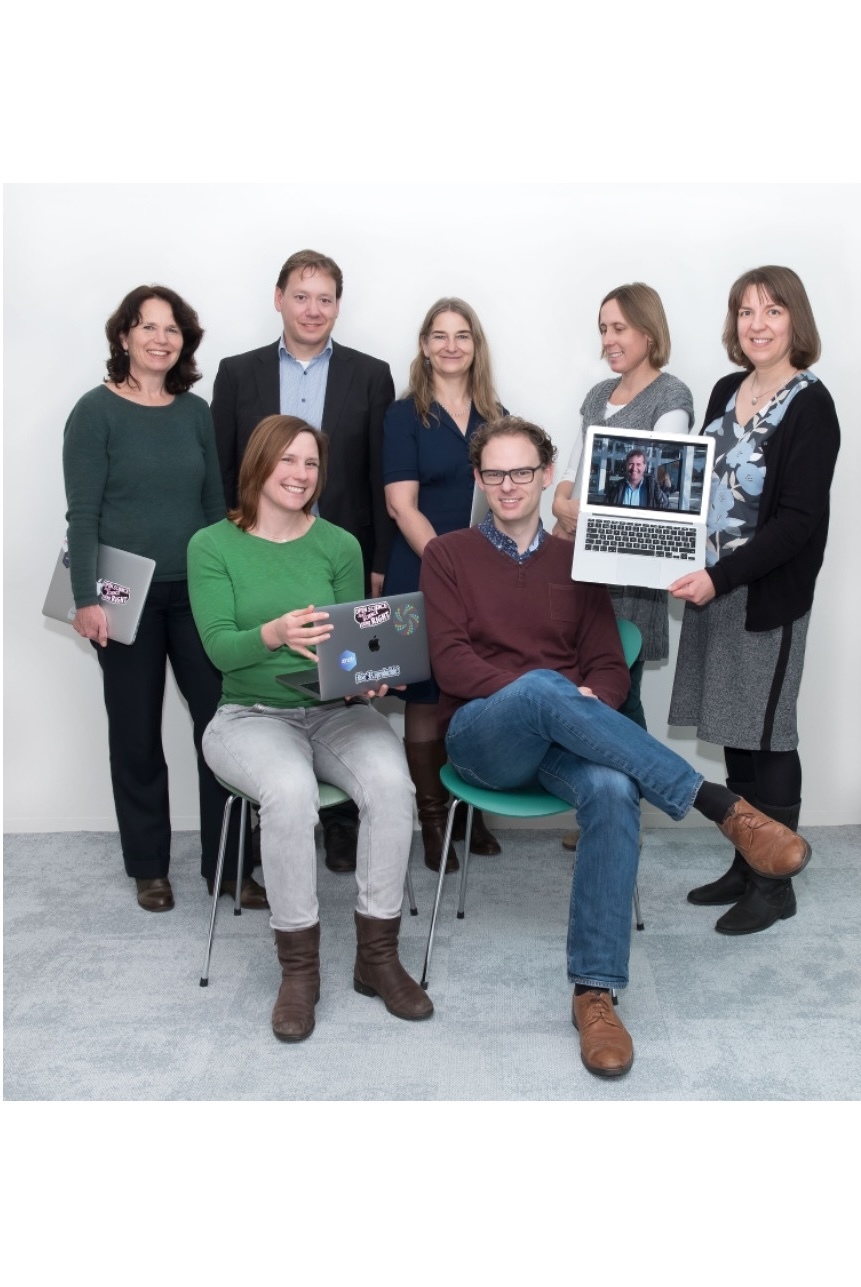
The journey so far has been amazing and rewarding!
Thank you all – former and current members – for your contributions to shaping the digital scholarship and open science support at the UBL in the first decade: Laurents Sesink, Isabel Brouwer, Damiaan van Eeten, Fieke Schoots, Saskia Woutersen, Joanne Yeomans, Michelle van den Berk, Dan Rudmann, Hannah DeLacey, Peter Verhaar, Ben Companjen, Tessa de Roo, Kristina Hettne, Erna Sattler, Femmy Admiraal, Heleen Palmen, Pascal Flohr, Fleur Praal, Ari Asmi, and many interns and other temporary ‘CDSers’.
Stay tuned to hear more!
Selected sources
- Mackenzie, A. and L. Martin. 2016. Developing digital scholarship: Emerging practices in academic libraries. Routledge.
- Sherman Centre for Digital Scholarship 2024. What is digital scholarship? Available at https://scds.ca/what-is-ds/.
- Universitaire Bibliotheken Leiden. 2016. Kennis versterken in een digitale tijd. Universitaire Bibliotheken Leiden meerjarenbeleidsplan 2016-2020.
- Universitaire Bibliotheken Leiden. Jaarverslagen 2017-2025.
- Weller, M. 2011. The digital scholar: How technology is transforming academic practice. Bloomsbury Academic.
Further reading
- CDS webpages
- For training materials, guides, and more, see the CDS Zenodo community and github
- instructional videos 'Open Science tips'
This blog was reviewed and (copy)edited by Fleur Praal, Peter Verhaar, Tessa de Roo, and Pascal Flohr. The blog content was created exclusively by humans without the use of generative AI systems (declared under the FAIA framework (faia.io)). Banner image: adapted from a photo by Monique Kooijmans.